


RenoMesh
Burrowing animal barrier for levees
Beavers, badgers and other burrowing animals can sometimes cause fairly large damage on bank slopes, along dykes or in the earth-filled embankments. In isolated cases, such damage caused by these mammals could lead to an increased risk of global slope failures with serious consequences of over flooding for the communities living in the area. Cavities created by beavers can be of high risk for the stability of the dyke.
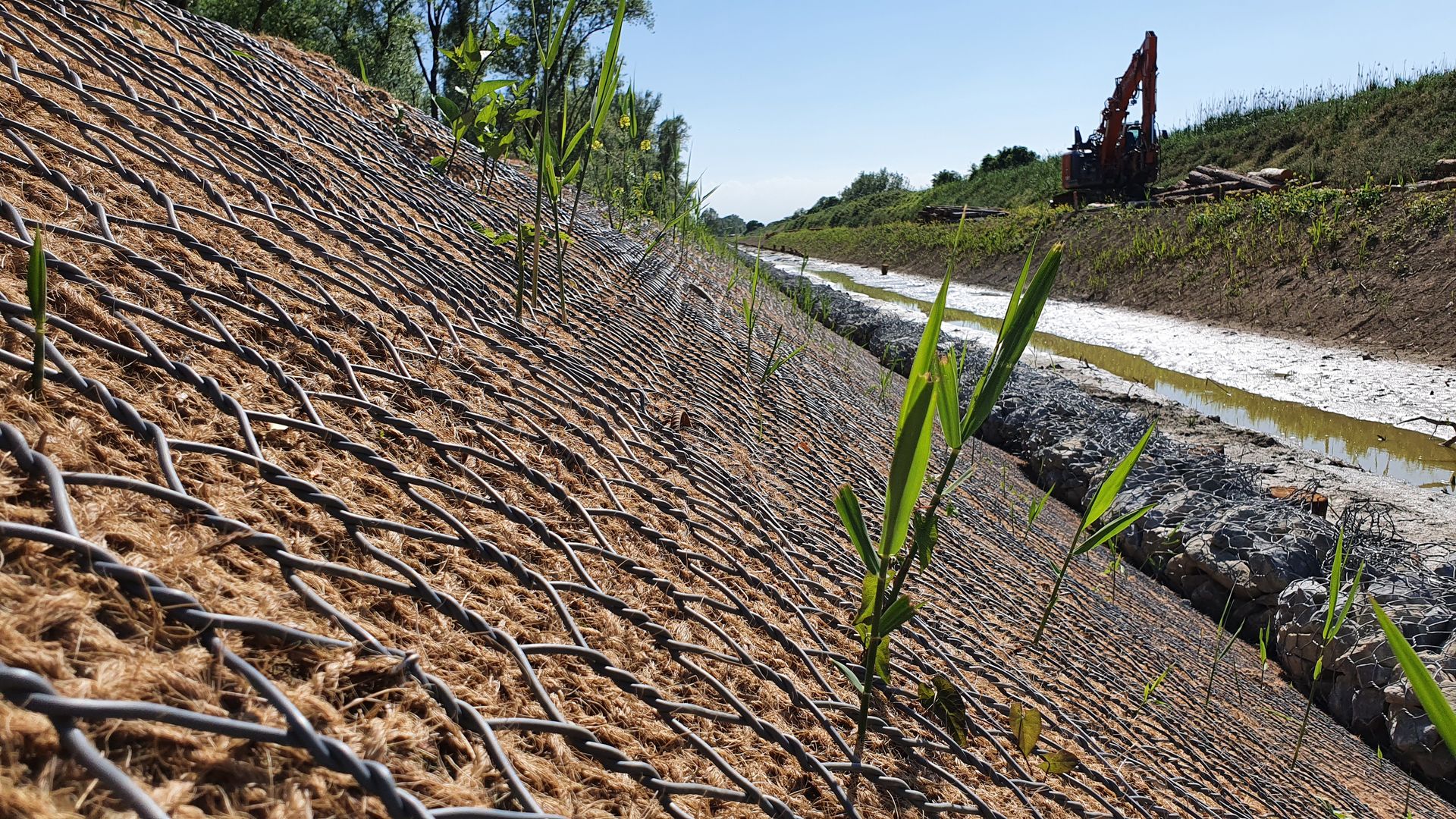
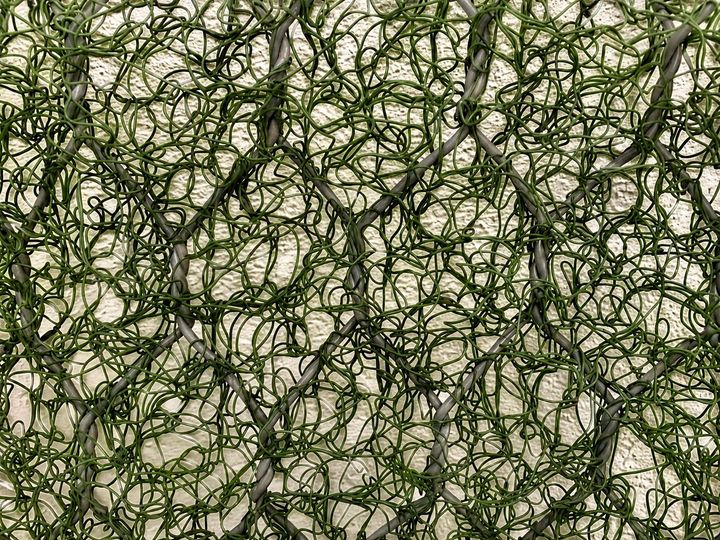
Our RENOMESH, RENOMESH BIO and RENOMESH GREEN work as an effective long-term barrier against the intrusion of burrowing animals, discouraging them from digging inside the levee core / embankment and inducing them to migrate to other non-critical areas of the river/infrastructure.
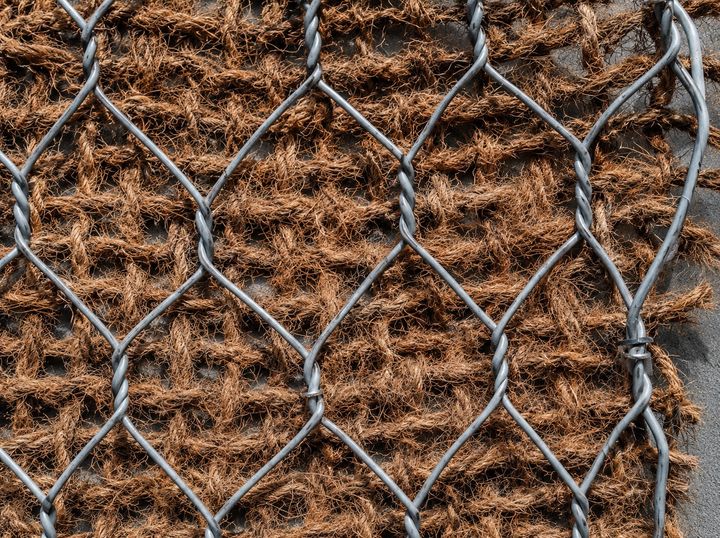
Maccaferri Renomesh is a proven solution: initial observation studies were conducted by the Technical University in Vienna (Austria) to find whether and how we could prevent these animals from burrowing into the critical core of an embankment along rivers in Europe. After trying several types of barrier systems, the study concluded that the only way to create an effective barrier to the bite of beavers is to use the steel mesh.
In the past, synthetic materials were used, due to their durability in water, but they proved not to be effective against rodent bites. Tests conducted at Vienna University of Technology on several types of barrier systems proved that steel mesh is the only way to create an impenetrable barrier to resist the strong bite of a beaver.
Moreover, these solutions promote the establishment of vegetation, allowing integration into the environment. We use recycled steel, which contributes to cutting CO2 emissions. Moreover, these solutions promote the establishment of vegetation, allowing integration into the environment. We use recycled steel, which contributes to cutting CO2 emissions.
Success Stories
Built, not just drawn
Discover more
Anti-Burrowing Protection for Rail Embankment
United Kingdom
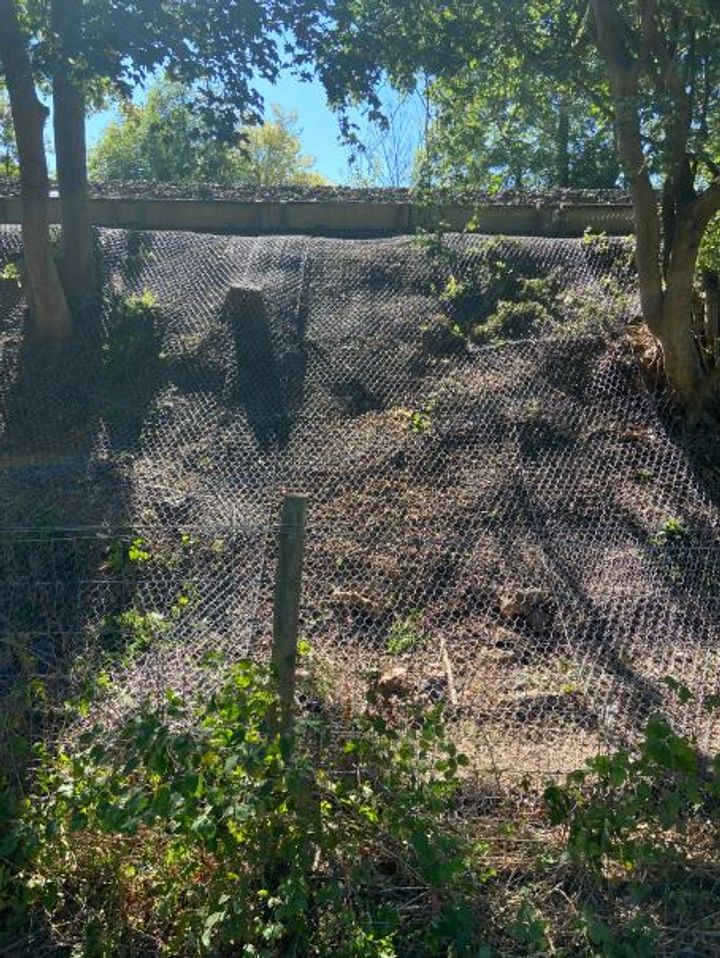
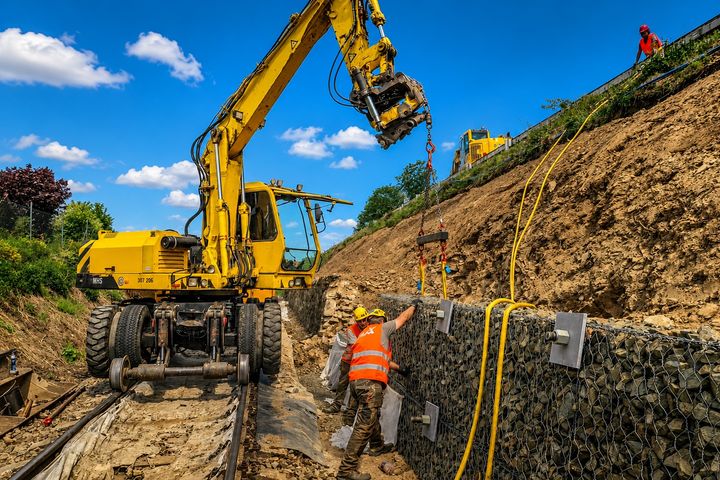
Network Rail undertook planned rail embankment maintenance on the westbound Worcester to Hereford line near Bransford Court Lane, Worcestershire. Following devegetation works, the embankment became vulnerable to burrowing animals such as rabbits, badgers, and other mammals. These animals can tunnel into the embankment core, creating voids that compromise structural stability and increase the risk of failure. A major concern was the impact of stormwater infiltration. Animal burrows act as channels for water ingress, allowing rainwater to penetrate deep into the embankment and weaken its internal structure. Over time, this can lead to erosion, instability, and costly maintenance issues. To address these risks, Network Rail required a durable anti-burrowing solution that would protect the embankment while maintaining an environmentally sensitive design. The system needed to prevent animal access without restricting the re-establishment of vegetation, ensuring both structural performance and ecological integration.
Discover more
Badger Anti-Burrowing Protection for East West Rail Alliance (EWRA)
United Kingdom
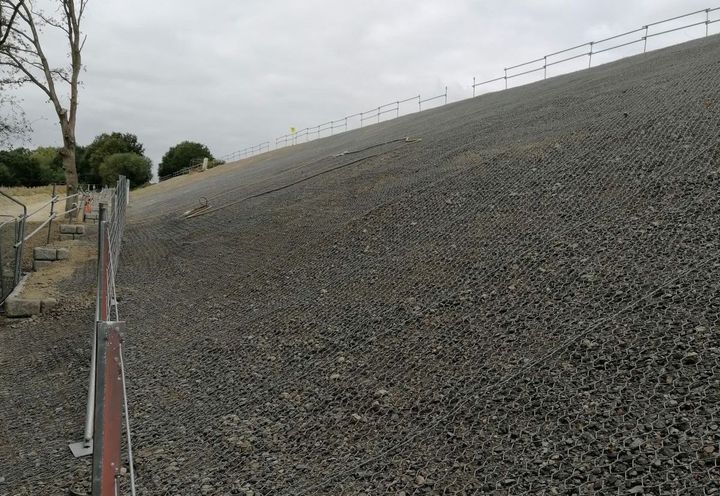
The East West Rail Alliance (EWRA) is a major UK rail infrastructure project aimed at reinstating and upgrading the historic Varsity railway line to connect Oxford and Cambridge via Bicester, Milton Keynes, and Bedford, creating a strategic east–west rail link that avoids London. Spanning a long distance through rural countryside, the project faces a range of environmental and geotechnical challenges. One of the most critical issues encountered was the presence of badgers and other burrowing animals along the rail corridor. Badgers are highly effective diggers, creating extensive underground sett networks that can extend beneath railway embankments. These burrows pose a serious risk to rail infrastructure stability. Excavation beneath embankments can lead to ground weakening, potential slope failure, and, in extreme cases, collapse. Furthermore, the interconnected tunnels allow water ingress deep into the embankment, accelerating erosion and increasing maintenance requirements. This combination of structural instability and drainage issues can result in operational delays, safety concerns, and increased lifecycle costs for the railway. A durable, environmentally sensitive, and effective anti-burrowing solution was required to protect the railway embankments from ongoing wildlife activity while maintaining ecological balance.
Discover more
Railway Embankment Protection with Anti-Burrowing Mesh
United Kingdom
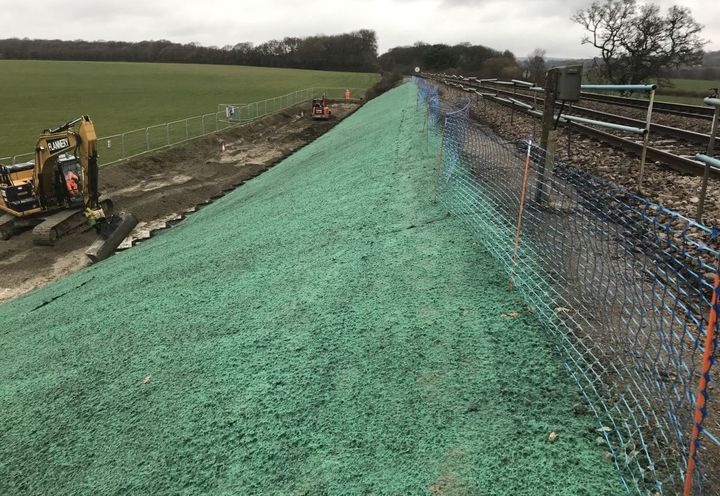
Network Rail is delivering a record £1. 25 billion investment programme to upgrade rail infrastructure across Kent and South East London. This includes improvements to track, signalling systems, embankments, structures, stations, and depots, all aimed at improving passenger journeys and reducing delays. A critical part of this programme focuses on railway embankment stabilisation to minimise disruption caused by landslips along key routes. Due to the extensive geographical coverage of the network, environmental and geotechnical challenges have become a major concern. One of the most significant issues is burrowing animals damaging railway embankments. Species such as rabbits, badgers, and other mammals can tunnel into embankments, weakening their structural integrity. These burrows create direct pathways for water ingress, allowing stormwater runoff to penetrate the embankment core. Over time, this leads to internal erosion, reduced soil stability, and an increased risk of embankment failure and rail service disruption. At Edenbridge, this issue was particularly critical. The project required the embankment to be reshaped and revegetated for slope stabilisation and environmental integration. However, without effective protection, the restored slopes remained vulnerable to renewed animal activity. Network Rail, therefore, required a durable anti-burrowing solution that could prevent wildlife intrusion while maintaining ecological compatibility and supporting vegetation growth.
Discover more
Deep dive into
RenoMesh
What we can do with
RenoMesh
Get in touch with us
[contactForm_txtSuccessSubmit]