
Netting
Steel wire rockfall protection systems
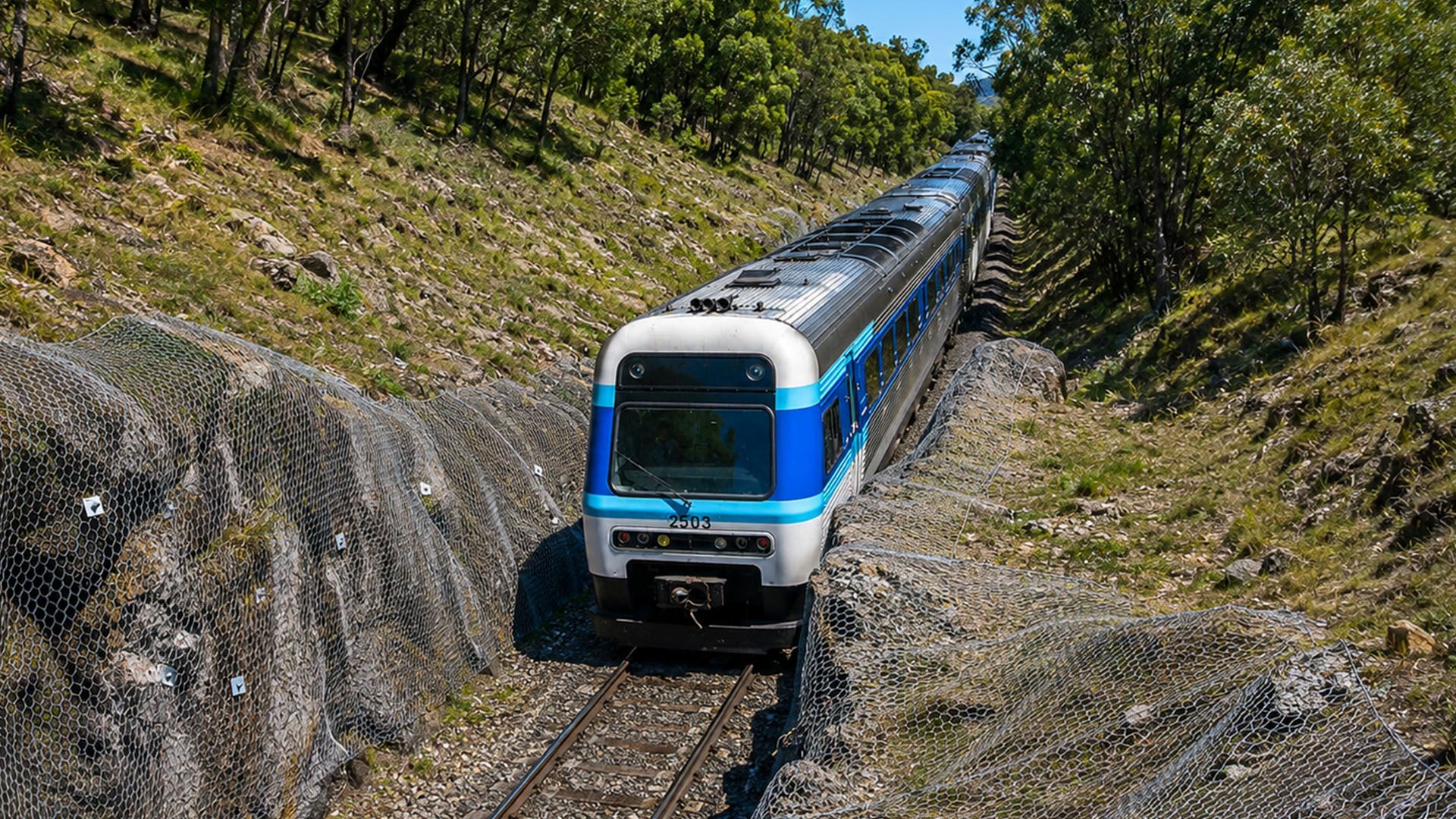
Maccaferri DT Mesh is a core component of our MacRO rockfall mitigation and natural hazard protection application area. It is one out of a range of mesh systems that are selected according to our analysis of the project site conditions and client requirements.
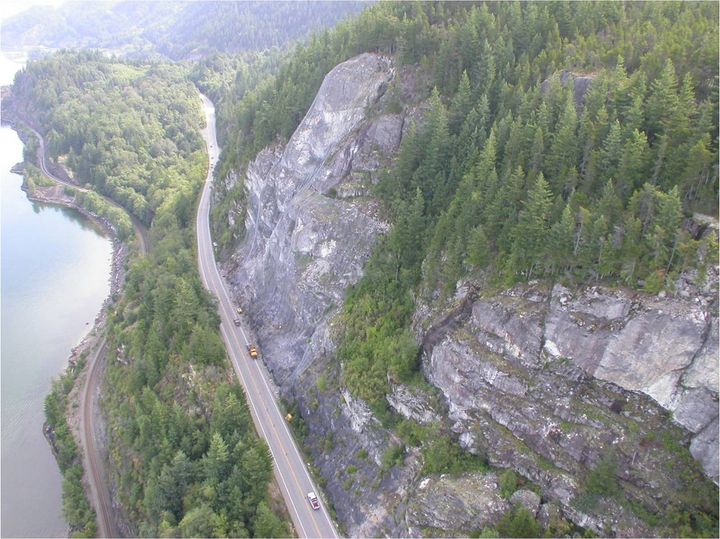
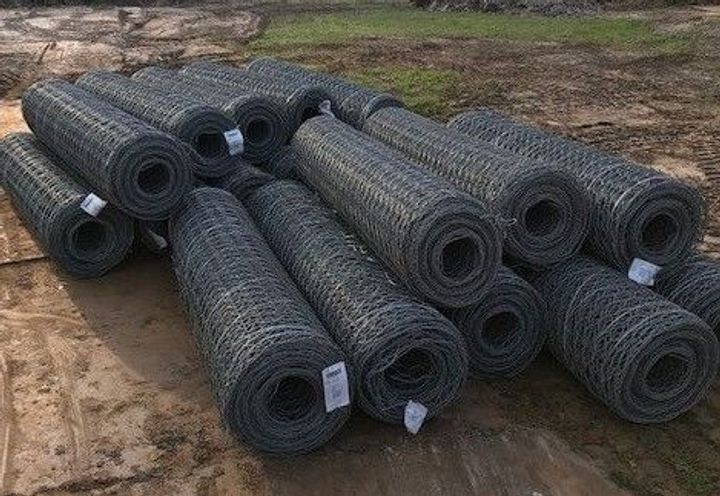
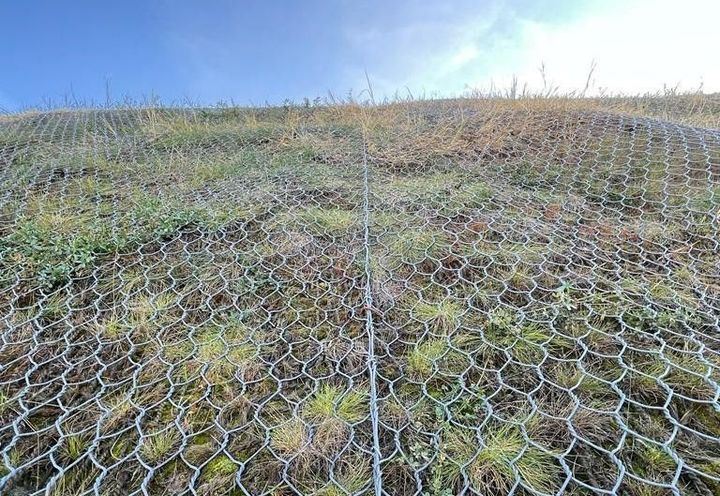
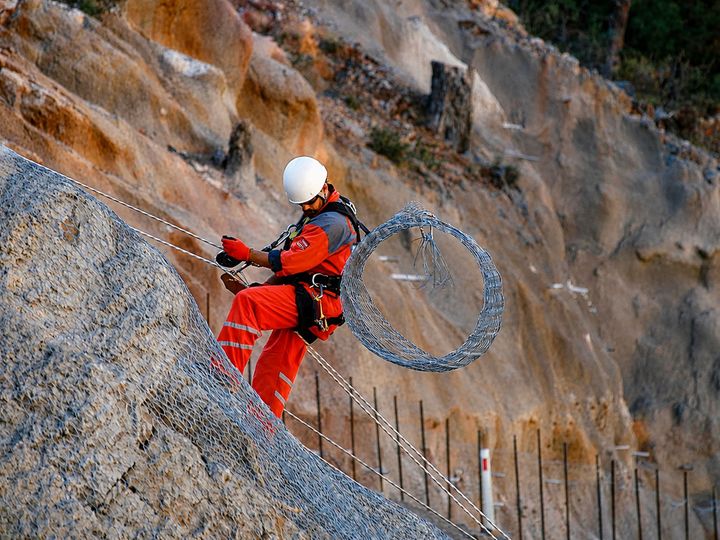
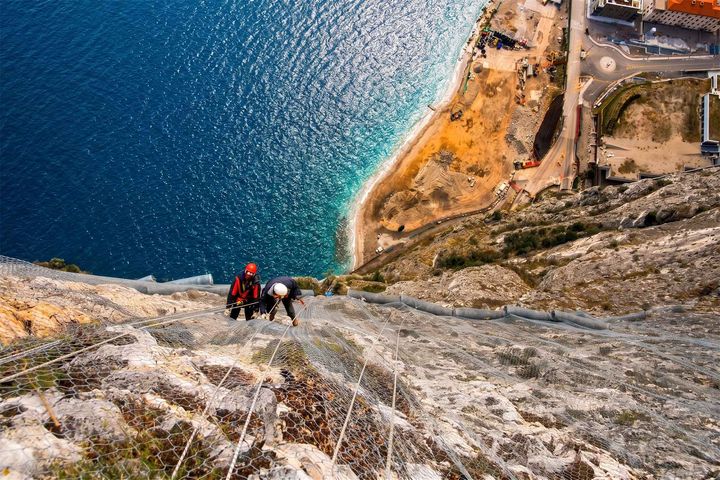
Used for over 50 years, our DT Mesh is engineered from our double twisted hexagonal woven steel wire and is used as a drapery system to prevent rocks and debris from falling onto roads and railways. Due to the characteristics of the double twist, the steel wire mesh can withstand the punching force of falling rocks and without unraveling in the event of wire breakage.
DT Mesh is made from high quality steel wire, which is heavily galvanised to provide long term corrosion protection. An additional protective polymeric coating is also applied for meshes that are to be used in more aggressive environments, or where a longer design life is required.
Our DT mesh is manufactured in our factories around the world. In selected factories, the mesh is produced in compliance with CPR - Construction Product Regulation 305/2011, having EC marking in compliance with ETA-16/0758. The management and production system is certified in compliance with ISO 9001 and ISO 14001 (related to the environmental management system).
Success Stories
Built, not just drawn
Discover more
BEAVERNETTING EVERTSOORD
A thriving beaver population is threatening the stability of the Netherlands' sea defences. The Mammal Society has brought together other wildlife groups to work out how to protect these important water-blocking dykes from the small but potentially destructive semi-aquatic rodents. Beavers play an important ecological role in the Netherlands and were initially brought in to increase biodiversity. The beaver-breeding program began in 1988, and since then the beaver population has grown exponentially. There are now an estimated 700 beavers residing in the country's streams and canals. Triumphant mating habits combined with the beavers' ability to breed so successfully in the Dutch countryside mean they have been moving beyond the southern province of Limburg and entering towns and cities that may not be prepared for the influx. With the Dutch beaver population expected to hit around 7,000 by 2032, the need to take pre-emptive action is now a very important theme.
Discover more
HELMHOLTZ-ZENTRUM BERLIN ADLERSHOF
The University Campus in Berlin-Adlershof is well known for the many research institutions present in its area. One of those is the HZB Helmholtz - Zentrum Berlin, where a prototype of a linear accelerator with energy recovery is placed. In this building, electrons are accelerated to almost the speed of light using a great deal of energy. After passing through a high-speed path, the electrons are to be recaptured in bERLinPro and their energy recovered. Therefore the hall is protected by a reinforced soil structure made with the wrap-around system. In the last times, some foxes started to dig and excavate tunnels inside the embankment, creating some instability problems.
Discover more
LÖTZGALERIE
Austria
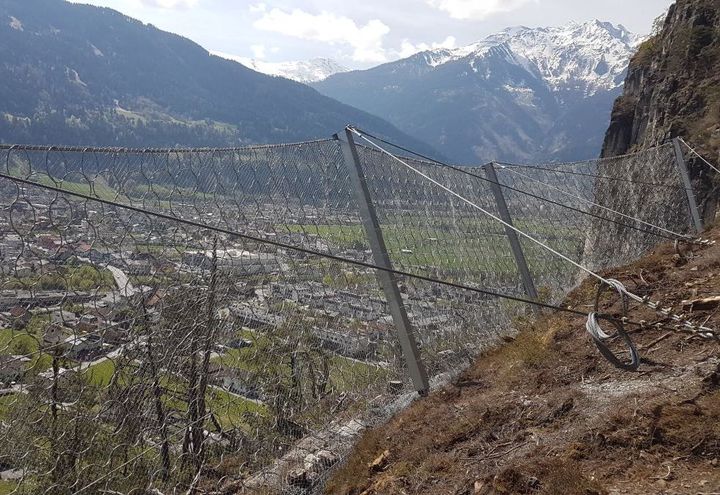
The busy Inntal motorway from Arlberg towards Innsbruck is a very important west-east connection. For the construction of a new gallery below steep rock faces, ASFINAG has planned 3000 kJ rockfall protection nets. These barriers will protect the construction site and the motorway during construction.
Discover more
Deep dive into
Netting
What we can do with
Netting
Applications
Solutions
Get in touch with us
[contactForm_txtSuccessSubmit]